Why did F1 ban refuelling?
F1 banned refuelling during races from the 2010 season to cut costs. The fires and pit-lane accidents are what people remember, but the ban came in a cost-cutting package voted through by the FIA World Motor Sport Council on December 12, 2008, with every team’s agreement. Each team had been shipping its fuel rigs to every race.
That was the second time F1 had stopped refuelling. It was banned from 1984, came back in 1994, and lasted 16 seasons before going again.
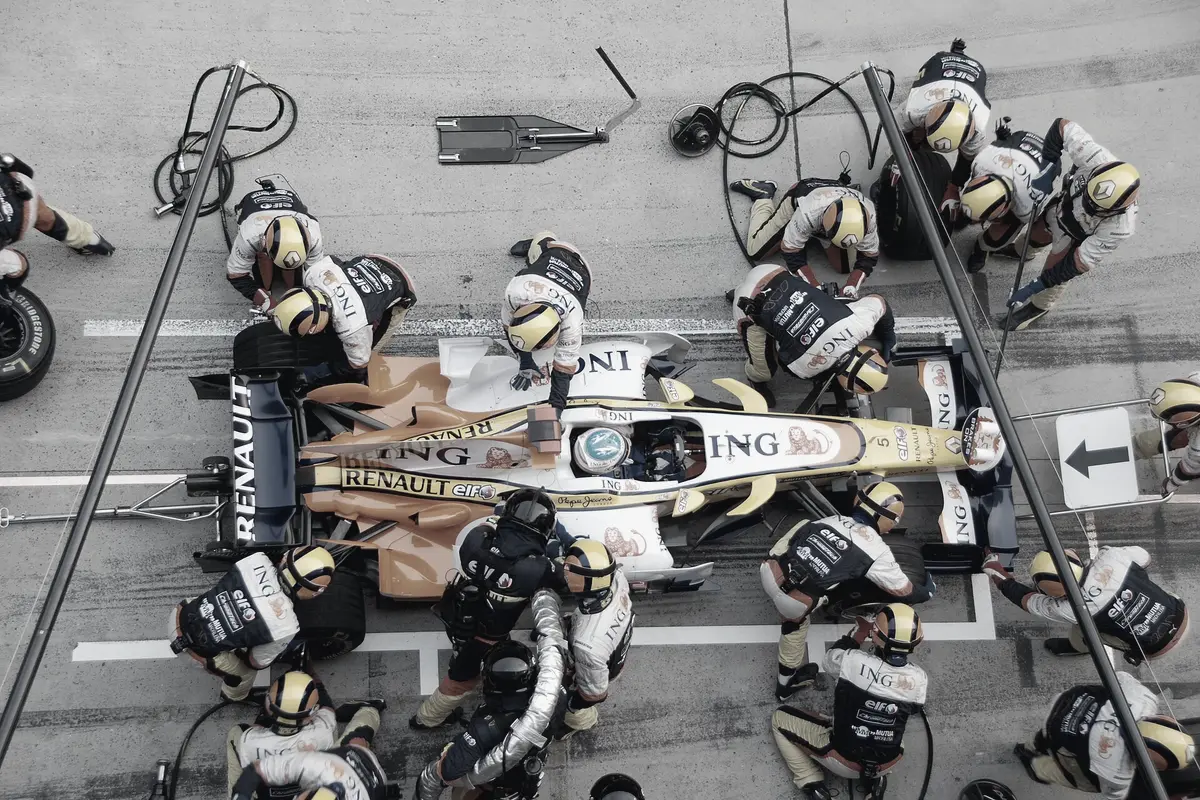
Fernando Alonso’s Renault being refuelled during a stop at the 2008 Chinese Grand Prix.
Photo: Bert van Dijk, CC BY-SA 2.0, via Wikimedia Commons; colour-graded and cropped by The Second Grid (this adaptation is licensed under the same licence).
How refuelling worked
From 1994 every team used the same specification of rig. The French aerospace firm Intertechnique supplied the first ones, and a smaller version arrived for 1995, which grandprix.com reported would “reduce freight costs”. Freight costs were a concern almost from the start.
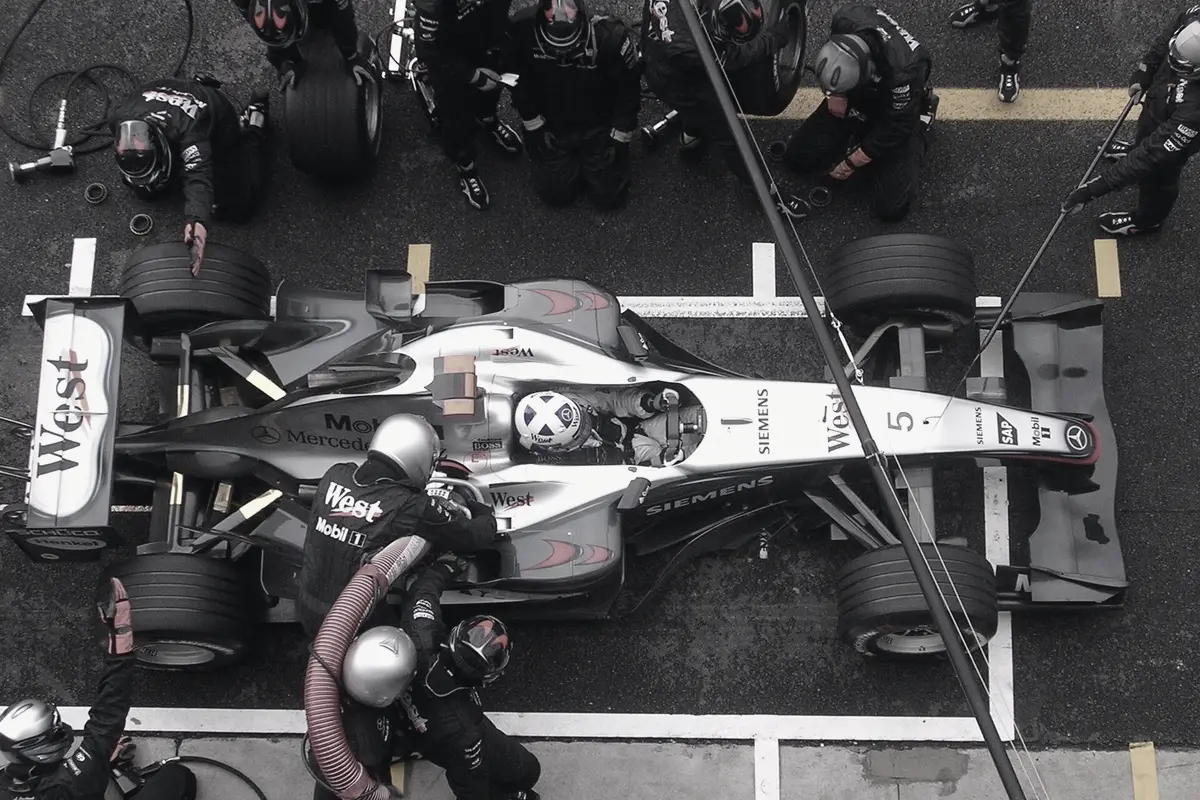
A McLaren stop at Monza in 2004: the fuel hose is locked into the left side of the car while the wheels are changed.
Photo: Fabio Alessandro Locati, CC BY-SA 3.0, via Wikimedia Commons; colour-graded and cropped by The Second Grid (this adaptation is licensed under the same licence).
The rig pushed fuel through a heavy armoured hose at around 12 litres a second. The fuel man locked the nozzle on to the side of the car and held it there, and the stop lasted as long as the fuel took, because changing the tyres took less time than filling the tank.
So refuelling turned the pit stop into a strategy weapon. A car could start light and fast on a short first stint, or heavy and run longer, and races were often won by the stint lengths rather than on-track passing.
A fire and a hose: the safety case that didn’t end it
The most famous refuelling accident happened at Hockenheim on July 31, 1994, in the first season back. Fuel sprayed over Jos Verstappen’s Benetton during his stop on lap 15 and caught fire. It was out within seconds. Verstappen and several mechanics were treated for minor burns.
The two refuelling incidents everyone remembers
| Hockenheim 1994 | Singapore 2008 | |
|---|---|---|
| Driver | Jos Verstappen, Benetton | Felipe Massa, Ferrari |
| What happened | Fuel sprayed on to the car and ignited during his lap-15 stop | Released with the hose still attached |
| Injuries | Minor burns to the driver and mechanics | A mechanic knocked over, not seriously hurt |
| Result | Fire out within seconds | From pole to 13th |
| Refuelling | Kept for 15 more seasons | Ban already being prepared |
Source: Formula1.com, 2008 Singapore Grand Prix result; Motorsport.com, 1994 German GP report; Crash.net (2008)
Bernie Ecclestone, then running the teams’ association FOCA, said afterwards that “it does not make me have a rethink on refuelling” (Motorsport.com). Refuelling carried on for 15 more seasons.
The other picture everyone remembers is from Singapore on September 28, 2008. Felipe Massa led from pole, came in for his first stop under the Safety Car, and was given the green light while the hose was still in his Ferrari. He dragged it down the pit lane and stopped at the exit while his crew ran down to pull it out. Ferrari’s light system was being run by hand that night. “We were not using the electronic system, it was run manually,” team principal Stefano Domenicali said afterwards.
Massa finished 13th, and lost the championship to Lewis Hamilton by one point, 98 to 97. Plenty of other races counted towards that point too. But by then the decision to ban refuelling was already being worked out, and it was about money.
What actually ended it: a cost vote in December 2008
The 2008 financial crisis put F1’s costs at the top of the agenda. Honda pulled out of F1 that December. On December 12 the World Motor Sport Council, meeting in Monaco, approved a cost-cutting package that it said had “the unanimous agreement of the Formula One teams” (Autosport). A ban on race refuelling was on the list for 2010.
World Motor Sport Council, Monaco
Dec 12, 2008
The refuelling ban was listed for 2010 in a cost-cutting package with “the unanimous agreement of the Formula One teams”.
Source: Autosport, the full list of cost-cutting measures (December 12, 2008); FIA release text
The idea came from the teams’ association, FOTA. RaceFans reported that FIA president Max Mosley first dismissed it because he thought it would hurt “the show”, before the teams convinced the FIA on cost grounds.
The main saving was logistics. Every team flew a pair of refuelling rigs to every race, and the rigs were getting old. Reporting at the time said the ban meant teams would not have to replace or rebuild them, and would save on freight.
It did not save everyone money straight away. Toyota’s Pascal Vasselon told Autosport in 2009 that redesigning the car around a bigger tank meant “it would not be a cost saver but a cost driver!” No reliable figure for the saving was ever published.
What changed in 2010, when F1 stopped refuelling
The cars had to carry fuel for the whole race from the start. Tanks went from about 80 litres to about 250, and the start-line fuel load went from around 60 kg to as much as 180 kg (The Globe and Mail). Wheelbases got longer to fit the tank in.
Fuel tank capacity, litres
Source: The Globe and Mail (March 12, 2010); Autosport (October 13, 2009)
Pit stops became tyre changes only, and they kept getting faster. In refuelling races the stop lasted as long as the fuel took. Without refuelling it came down to about 2 seconds, so a gain or loss in the pit lane is now a matter of tenths.
Is refuelling still banned?
Yes. Article B5.1.4 of the 2026 Sporting Regulations says fuel “may not be added to nor removed from an F1 Car after it has left the Pit Lane to start the reconnaissance lap(s)” until the session is over. That covers the Sprint and the Grand Prix.
Refuelling flow rate, litres per second
Source: FIA 2026 Sporting Regulations, Article B1.5.9; Jalopnik (2025) for the rig flow rate
The cars are still refuelled, but only in the garage. Article B1.5.9 limits the flow to 0.8 litres a second, about a fifteenth of what the race rigs delivered, with the engine stopped and someone standing by with a fire extinguisher.
There has been one serious attempt to bring it back. A 2015 proposal to reintroduce refuelling for 2017 was shelved by the Strategy Group that July, with Motorsport.com reporting that it would need heavy rigs and extra pit crew again. Nothing in the current rules points to a return. For how much F1 still pays to move its equipment around the world, see how 1,200 tonnes of kit reaches the next race.
Questions people also ask
- Do F1 cars still get refuelled?
- Yes, but only in the team’s garage between sessions, with the engine off and at no more than 0.8 litres a second (Article B1.5.9 of the 2026 Sporting Regulations). No fuel can be added from the moment the car leaves for the reconnaissance lap until the race is over.
- Will F1 bring back refuelling?
- Not under any current plan. A proposal to bring it back for 2017 was dropped by F1’s Strategy Group on July 1, 2015, partly because it would need heavy rigs and extra pit crew, and the 2026 regulations still ban it during the race.
Key facts
| Refuelling era | 1994 to 2009; banned from the 2010 season |
|---|---|
| Decided | FIA World Motor Sport Council, Monaco, Dec 12, 2008, as part of a cost-cutting package agreed with the teams |
| Flow rate | Around 12 litres a second through the race rigs |
| Fuel tanks | About 80 litres in 2009; about 250 litres in 2010 |
| Rule in 2026 | Sporting Regulations B5.1.4: no fuel added once the car leaves for the reconnaissance lap |
| Garage refuelling today | Allowed between sessions, at no more than 0.8 litres a second (B1.5.9) |
Sources (16, 3 primary, marked ●)
- ● 2026 F1 Regulations, Section B (Sporting), Issue 09 (October 1, 2026), FIA
- ● 2008 Singapore Grand Prix race result, Formula1.com
- ● 2008 drivers’ standings, Formula1.com
- The full list of cost-cutting measures (December 12, 2008), Autosport
- From fia.com: the decisions of the WMSC for the future of Formula 1, auto123
- Formula 1 costs slashed for 2009 (Adam Cooper, February 2009), Motor Sport
- How new rules will change 2010 F1 cars (April 30, 2009), RaceFans
- 14 reasons to love the refuelling ban (December 17, 2009), RaceFans
- No fuelling about (Dieter Rencken, October 13, 2009), Autosport
- Minor F1 rule changes have a major impact (March 12, 2010), The Globe and Mail
- F1 updates its refuelling equipment (March 13, 1995), grandprix.com
- 1994 German GP report, Motorsport.com
- Thirty years on: the story behind F1’s most iconic refuelling picture (Jonathan Noble), Autosport
- No knee-jerk reaction to Ferrari pit issues (2008), Crash.net
- Here’s how F1 cars were refueled in mere seconds (August 31, 2025), Jalopnik
- Formula 1 refuelling return killed off (July 3, 2015), Motorsport.com
Spotted an error? Email contact@thesecondgrid.com with your source. Confirmed fixes go on the corrections log.
Related long-form episodes
All articles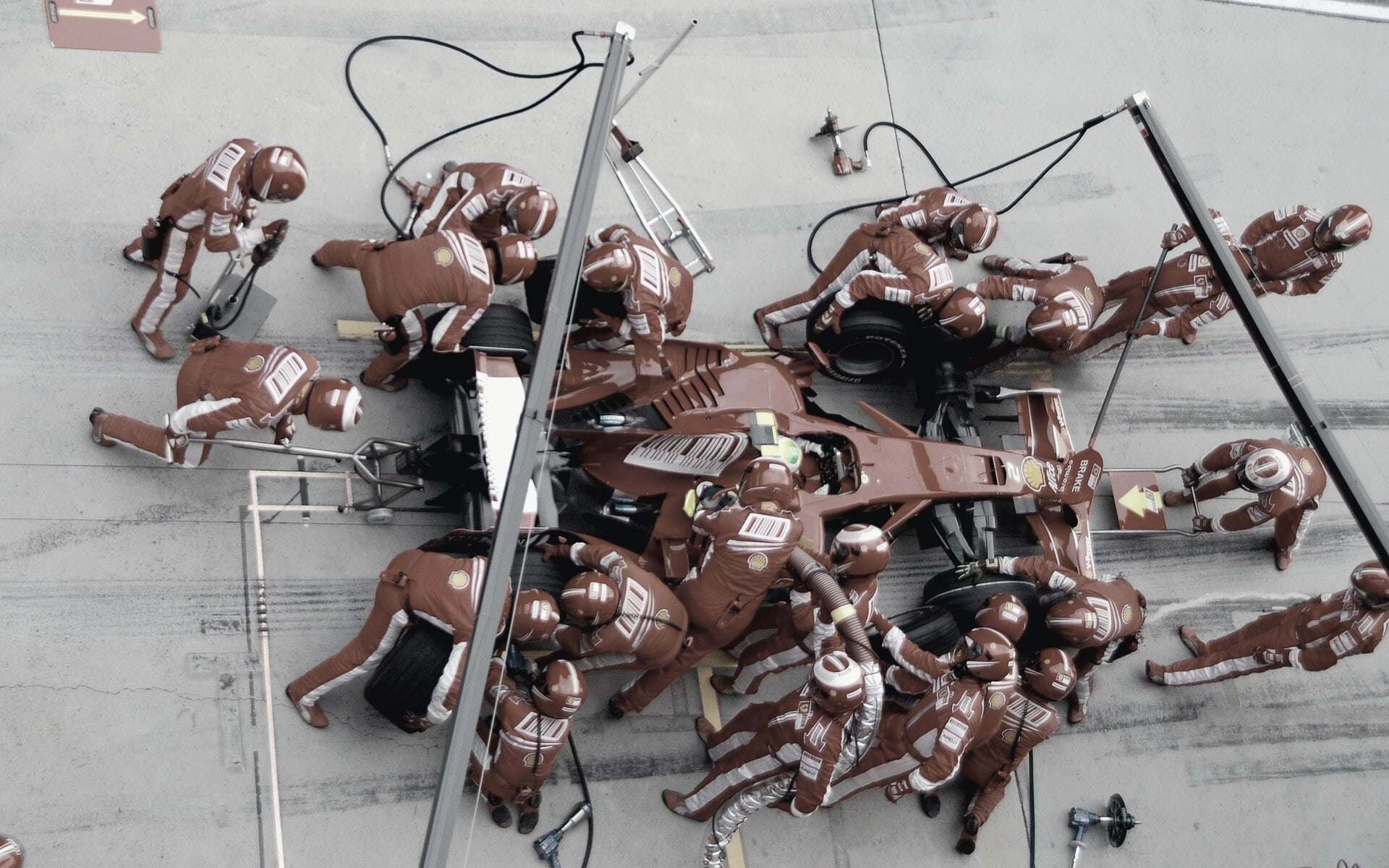
Why F1 banned refuelling twice, and won’t bring it back
Brabham invented the modern refuelling stop in 1982.
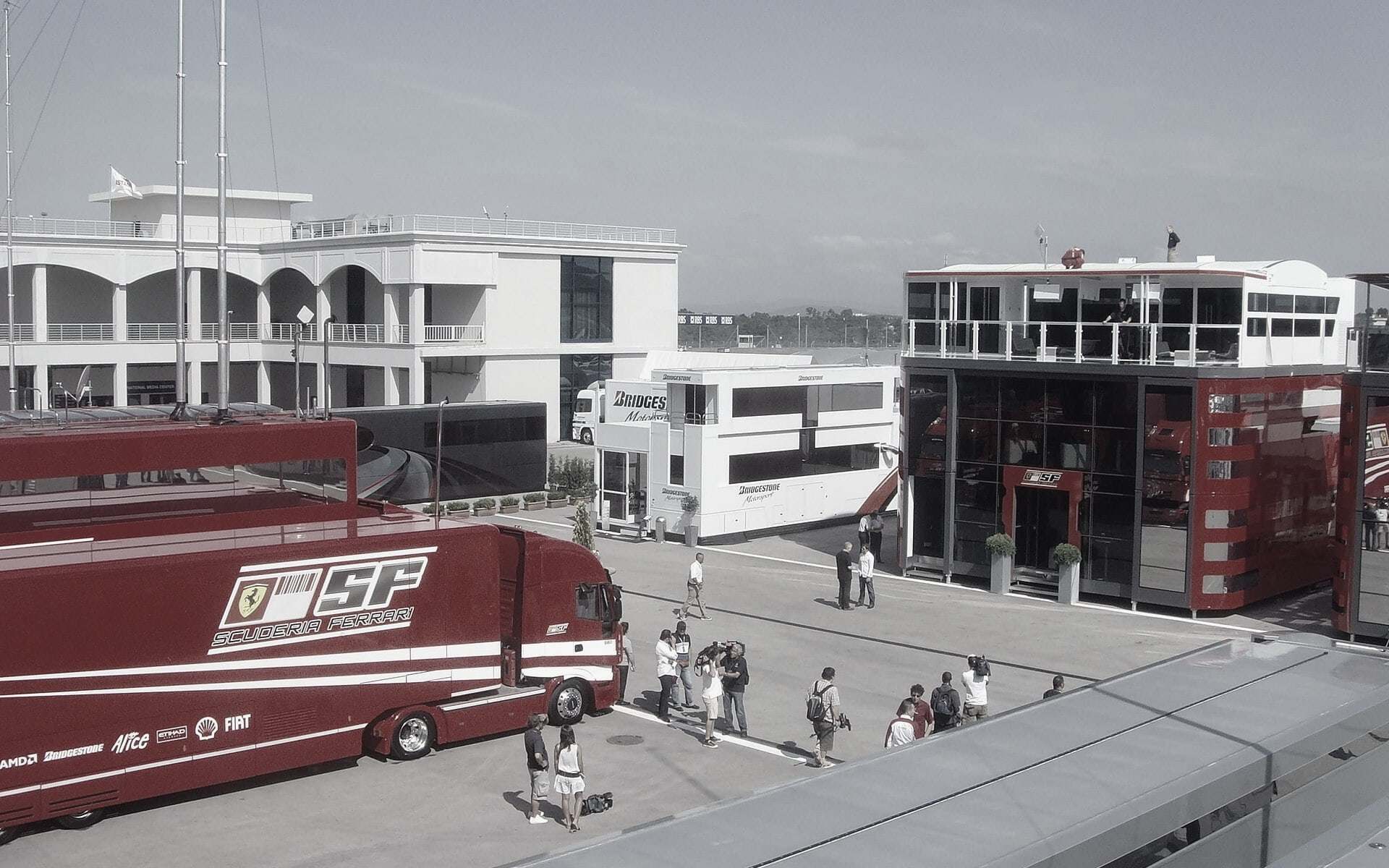
F1 logistics: how 1,200 tonnes of kit reaches the next race in 14 days
Up to 1,200 tonnes of equipment leaves every Formula 1 race weekend, and it has 14 days to be rebuilt on another continent.