Why F1 banned refuelling twice, and won’t bring it back
Brabham invented the modern refuelling stop in 1982. F1 banned it in 1984 over the fires, brought it back for 1994, and banned it again from 2010 over the cost. For 2027 it would rather shorten every race.
Listen to this article
10:51 narration
Or click any word in the article to start the narration from there.
Watch the video version (16:36)
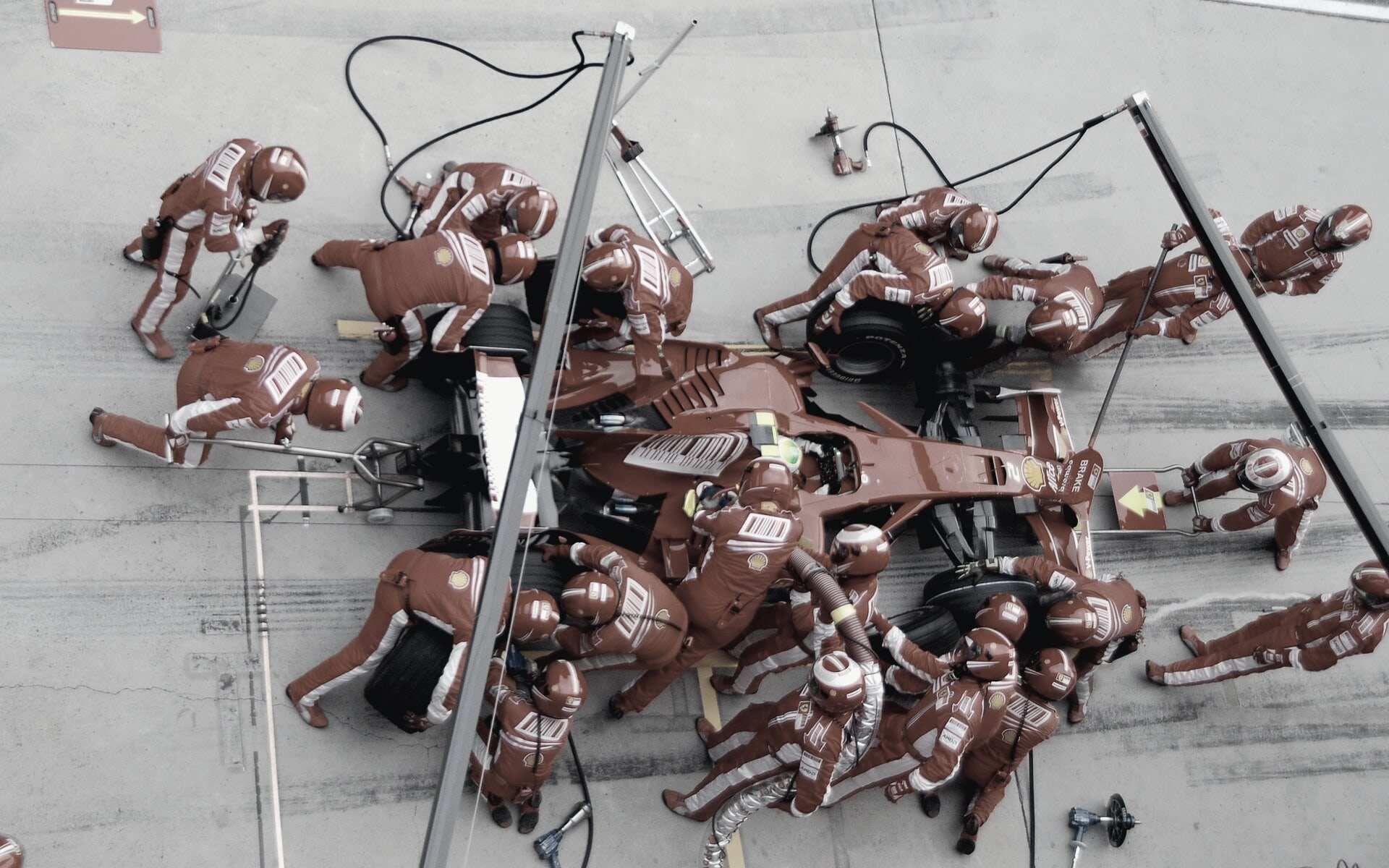
Felipe Massa’s Ferrari being refuelled at the 2008 Chinese Grand Prix. Photo: Bert van Dijk, CC BY-SA 2.0, via Wikimedia Commons; colour-graded and cropped by The Second Grid; this adaptation is licensed CC BY-SA 2.0.
Formula 1 has banned mid-race refuelling twice. The first ban, for 1984, came because people were scared of fires in the pit lane. The second, from 2010, came because the teams were tired of paying to fly fuel rigs to every race. Every attempt to bring it back since has died on the same two arguments: it costs too much, and it moves the racing from the track into the pit lane.
F1 made its view clear again in September 2026. The 2027 engines will be allowed more fuel flow, so the cars need more fuel. The teams didn’t want bigger tanks, and refuelling wasn’t on the table. So F1 made every Grand Prix shorter instead.
1982: Brabham’s half-tank plan
Modern refuelling started as a fix for one team’s problem. Brabham’s BMW turbo engine was strong and thirsty. A full tank for a whole race made the car heavy, and a heavy car wears out its tyres.
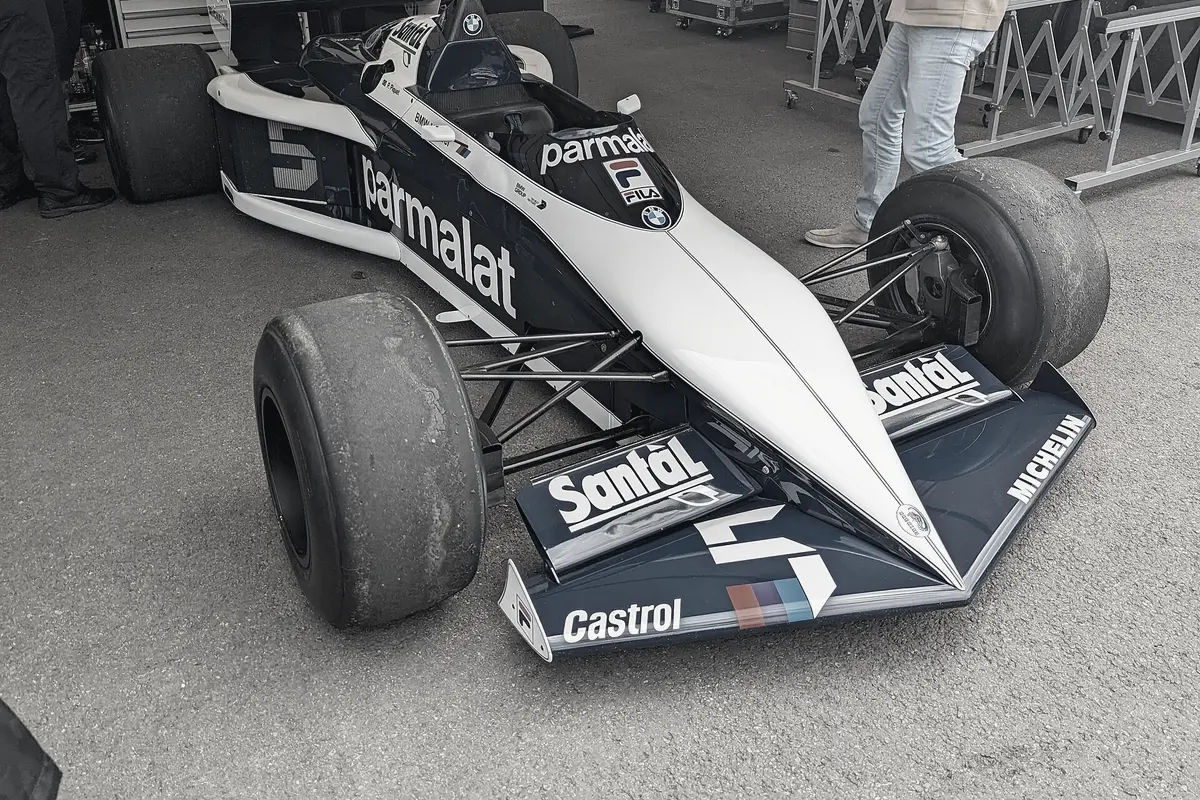
The Brabham BT52, built for 1983 around a small fuel tank and a planned stop.
Photo: Calreyn88, CC BY-SA 4.0, via Wikimedia Commons; colour-graded and cropped by The Second Grid (this adaptation is licensed under the same licence).
The designer Gordon Murray’s answer was to start with half the fuel. A lighter car is faster and can run softer tyres. Build a lead, stop halfway for fuel and fresh tyres, and go again. Murray later told Motor Sport that if the car could build a lead of about 26 seconds before the stop, it would win.
Nobody planned pit stops then. You came in when something broke. So Brabham had to invent the whole routine: the rig, the crew and the drill. They even heated the new tyres so the car wouldn’t lose time warming them up.
The first attempts never got as far as a stop. Doug Nye’s history lists them: at Brands Hatch one car stalled on the grid and the other was out after 9 laps, and in France both retired before half distance. At Hockenheim, Nelson Piquet was leading on the half-tank plan when he collided with Eliseo Salazar while lapping him, then went for Salazar on live television.
A week later, in Austria, it finally happened. Riccardo Patrese stopped from the lead after 24 laps, took on tyres and fuel in 15.6 seconds, and rejoined still in front. His engine failed 3 laps later, but Murray had his proof.
For 1983 Brabham built the BT52 around the idea, with a small tank. At the first race, in Brazil, Piquet’s stop took just over 16 seconds, with the car on manual jacks, and he still won. He took the title that year by 2 points from Alain Prost. Nobody claims refuelling won it for him, but the other teams were convinced Brabham had found something.
1983: everyone copies it, then the fires
By the middle of 1983, almost every team was planning stops. In a year, F1 went from no refuelling rigs to most of the grid pumping fuel into hot cars in a narrow pit lane, with mechanics standing next to them. Some got carried away: at Spa, Renault were fined $5,000 for having fuel churns out on the grid.
The 1984 fuel limit
220 litres
Refuelling was banned for 1984, with a limit on fuel for the whole race so teams couldn’t just build bigger tanks.
Source: Motor Sport, 1984 Brazilian Grand Prix report (May 1984)
The fires started at the first race. In Brazil, Keke Rosberg’s Williams caught fire while it was being refuelled. He climbed out, the fire was put out, and he got back in and finished second, before being disqualified for a push start.
Nobody was badly hurt, but the people in charge were nervous. In June 1983 Motor Sport wrote that the fire risk was causing “mumblings in official circles” about pit stops. For 1984, refuelling during the race was banned, with a 220-litre fuel limit for the whole race.
The first refuelling era lasted about a season and a half. For the next 10 years a pit stop meant tyres only, and teams got very good at it. By 1993 the record tyre stop, set by Benetton, was 3.2 seconds.
1993: Ecclestone brings it back
Refuelling came back as a side deal. In the summer of 1993 the teams were arguing about banning driver aids like active suspension and traction control, and at the German Grand Prix the team bosses met to settle it. According to Frank Williams, Bernie Ecclestone raised refuelling at the end of that meeting. On August 3, 1993 the governing body confirmed it would return in 1994.
Not everyone liked it. McLaren’s Ron Dennis said: “The chances are there will be a conflagration.” Williams’ Patrick Head thought “it will brighten up the racing.” Benetton’s Flavio Briatore was keen at first, then turned against it over “this monster of a machine that you have to carry around the world”, the same cost that ended refuelling 16 years later.
The pit-stop years, 1994–2009
The change showed at the first race back. In Brazil in 1994, Ayrton Senna and Michael Schumacher were fighting for the lead when they pitted together on lap 21, and Schumacher came out ahead, so the lead changed hands in the pit lane. Their second stops took 7.4 and 8.5 seconds, because the fuel was the slow part.
How long a stop took, seconds
Source: Motor Sport (April 1983); Formula1.com (2017); grandprix.com 1994 Brazilian GP report
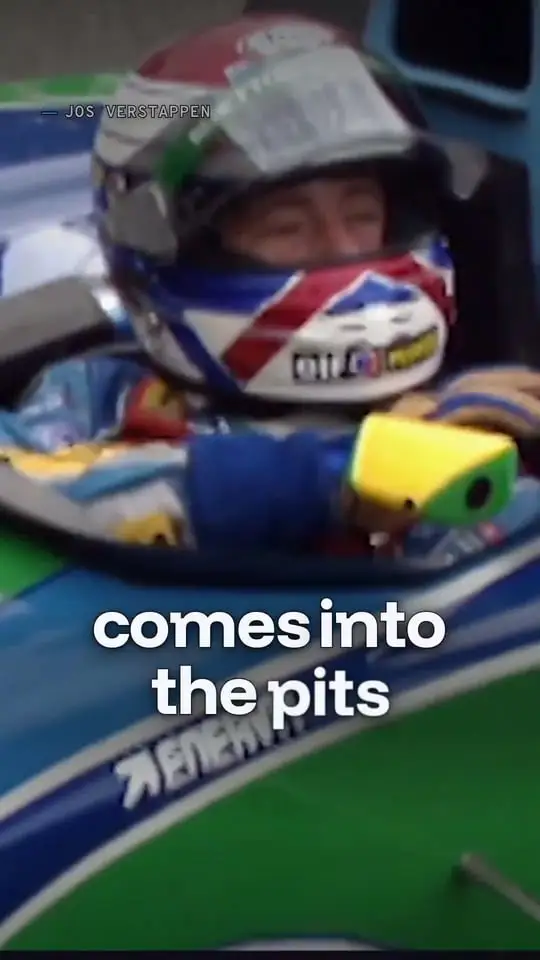
Dennis’s fire came at Hockenheim on July 31, 1994. During Jos Verstappen’s stop on lap 15, fuel sprayed over his Benetton and ignited. It was out within seconds, and Verstappen and some mechanics had minor burns. Ecclestone said it did “not make me have a rethink on refuelling”, and refuelling stayed for 15 more seasons.
The people running F1 liked what it did to strategy. The best-known example is Hungary in 1998. Schumacher’s Ferrari was stuck behind both McLarens on a track where passing is close to impossible, so Ross Brawn switched him to 3 stops mid-race and gave him 19 laps to build a 25-second lead. Schumacher did it and won by 9.4 seconds. In France in 2004, a 4-stop plan from Ferrari’s Luca Baldisserri beat Fernando Alonso, who had started on pole.
Races like those were the exception. Autosport’s Edd Straw counted that from 1994 to 2009 the top 2 finishers made the same number of stops 77% of the time. Usually everyone did the same thing and the order was shuffled in the pits.
The fires didn’t stop either. In Austria in 2003, fuel left in the nozzle from Rubens Barrichello’s stop caught fire on Schumacher’s Ferrari. He drove out and won the race.
Singapore 2008: Massa and the hose
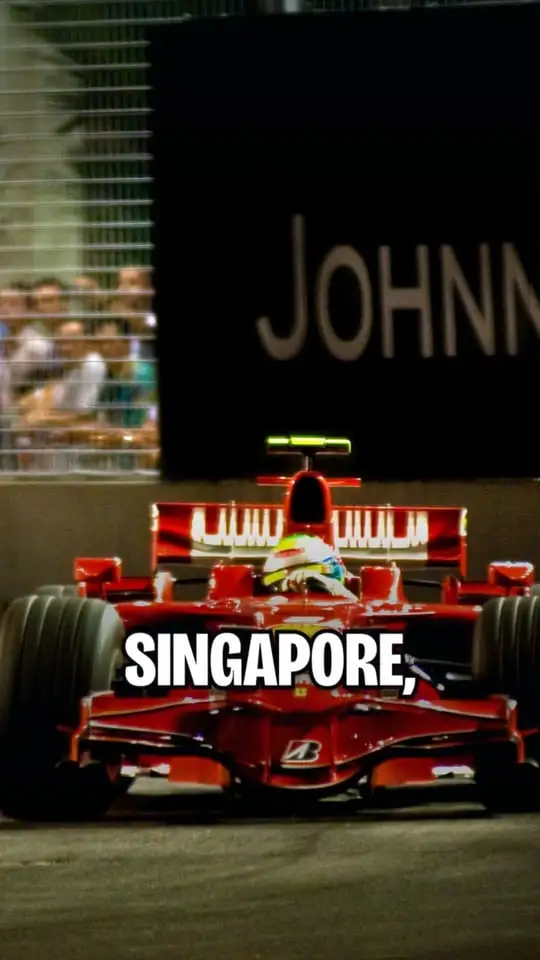
The most expensive refuelling stop came at F1’s first night race. On September 28, 2008, Felipe Massa led from pole while fighting Lewis Hamilton for the title. Ferrari used a traffic light instead of a lollipop man, and that night it was being run by hand. The light went green with the fuel hose still attached.
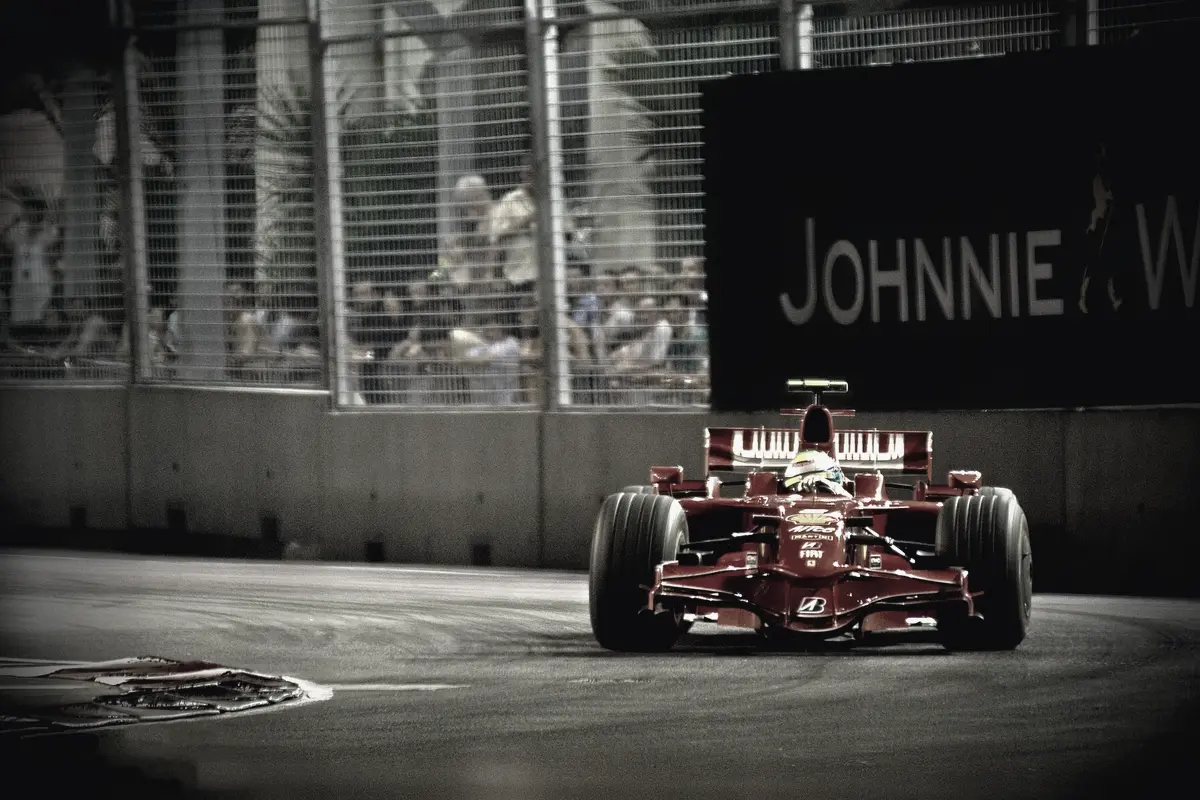
Felipe Massa’s Ferrari at the 2008 Singapore Grand Prix, F1’s first night race.
Photo: Erik Estrada from Normanton Park, Singapore, CC BY-SA 2.0, via Wikimedia Commons; colour-graded and cropped by The Second Grid (this adaptation is licensed under the same licence).
Massa dragged the hose down the pit lane, knocked over a mechanic, and had to stop at the exit while his crew ran down to pull it off. He finished 13th with no points, and lost the championship to Hamilton by 1 point, 98 to 97. Plenty of other things went wrong for Massa that year too.
December 2008: the cost vote that ended it
On December 12, 2008, the FIA’s World Motor Sport Council met in Monaco to cut costs. The world economy had just crashed and Honda had announced its exit from F1 a week earlier. The teams, working together as FOTA, had drawn up a list of savings, and a refuelling ban for 2010 was on it.
Autosport’s Dieter Rencken wrote that the reason for the ban was cost. RaceFans reported that every team flew a pair of refuelling rigs to every race, on every continent, along with the people to run them.
In Brazil in 2009, the second-last race with refuelling, McLaren released Heikki Kovalainen with the hose still attached, fuel sprayed back over Kimi Räikkönen’s Ferrari and there was a brief flash fire. McLaren were fined $50,000. Two weeks later, in Abu Dhabi, the rigs were used for the last time.
2010: one long stint
The second ban changed the cars more than the first. From 2010 they started each race with all the fuel they needed, about 160 kilos, roughly 3 times what a refuelling-era car might start with. Races became one long stint of managing tyres and fuel instead of sprints between stops.
Overtakes per race
Source: Autosport (Edd Straw, July 18, 2019)
Straw also counted overtakes, and they nearly doubled from 2009 to 2010. A lot else changed that year too, but it’s a hard number to argue with if you want refuelling back.
The fuel rules kept tightening. From 2014 there was a 100 kg limit for the whole race, later raised to 105 and then 110 kg, partly because fans disliked watching drivers lift and coast to save fuel.
Every comeback attempt since
Refuelling has been proposed 3 times since, and the arguments haven’t changed.
Every attempt to bring refuelling back
| Year | The case for it | What stopped it |
|---|---|---|
| 2015 | A proposal for 2017. Toto Wolff said it “could be spectacular” | The cost. Pat Symonds called the FIA’s estimate “an order of magnitude out”. Dismissed again in January 2016 |
| 2019 | Lighter cars. Romain Grosjean: the “easiest and cheapest way to bring 70 kilos off the car” | Teams. Christian Horner: refuelling races were “some of the most boring we have seen” |
| 2026 | Lighter cars for the V8 engines planned for 2031 | Still only an idea. Mohammed Ben Sulayem: “Nothing is being done yet” |
Source: GrandPrix247 (2015); Autosport (2016); ESPN and GrandPrix.com (2019); Reuters (July 2026)
In 2015 it was a plan for 2017. Mercedes boss Toto Wolff told the BBC it “could be spectacular”, but “if it’s too expensive, we won’t do it”. In January 2016 FIA president Jean Todt put the cost at around €50,000 per team a year. Williams’ Pat Symonds said that was “an order of magnitude out” and called refuelling “a retrograde step”.
In 2019 the reason was weight. Romain Grosjean, speaking for the drivers, called refuelling the “easiest and cheapest way to bring 70 kilos off the car”. Red Bull’s Christian Horner disagreed: “Go back and watch the races when we still had fuel stops. They were some of the most boring we have seen.” It was dropped again.
In July 2026 FIA president Mohammed Ben Sulayem said it was being looked at for the V8 engines planned for 2031, again to make the cars lighter, though “nothing is being done yet”. Autosport’s Jake Boxall-Legge called it “a solution to a question that does not exist”. With refuelling, a driver might never need to pass the car in front, and could just wait for the stops.
2027: shorter races instead of refuelling
In September 2026 F1 faced the choice directly. The 2027 engines get more fuel flow, so the options were bigger tanks, refuelling, or shorter races. F1 chose shorter races. The 2027 Sporting Regulations set the race distance at 290 km instead of 305, with Monaco at 260 km.
Grand Prix distance in 2027
305 → 290 km
The 2027 engines get more fuel flow. Rather than bigger tanks or refuelling, the races get shorter.
Source: FIA 2027 F1 Sporting Regulations, Issue 01 (October 19, 2026); The Race (September 3, 2026)
The same rulebook already puts 305 km back for 2028, so this is a one-season fix for now. For the other half of the pit stop, the tyre change F1 banned for 2005, see why only 6 cars raced the 2005 US Grand Prix. For the short version of the 2010 ban, see why F1 banned refuelling.
Key facts
| Banned | From 1984 (fire risk) and from 2010 (cost) |
|---|---|
| First planned stop | Brabham, Austrian Grand Prix, August 15, 1982 |
| Fuel limit with the 1984 ban | 220 litres for the whole race |
| Second refuelling era | 1994 to 2009, 16 seasons |
| Second ban decided | World Motor Sport Council, Monaco, December 12, 2008 |
| Fuel flow, then and now | About 12 litres a second from the race rigs; 0.8 in the garage today |
| Comeback attempts | 2015, 2019 and 2026; none got past discussion |
| 2027 race distance | 305 km cut to 290 km (Monaco 260 km), back to 305 km for 2028 |
Video chapters
- 0:002027: F1 shortens races rather than refuel
- 1:081982: Brabham’s half-tank plan
- 3:411983: everyone copies it, then the fires
- 5:281993: Ecclestone brings it back
- 6:321994–2009: the pit-stop years
- 7:18Hockenheim 1994: the Benetton fire
- 8:13Hungary 1998: 19 laps to find 25 seconds
- 10:06Singapore 2008: Massa and the hose
- 11:12December 2008: the cost vote that ended it
- 14:032015, 2019, 2026: every comeback attempt
- 15:412027: 305 km becomes 290 km
- 16:06Should refuelling come back?
Sources (42, 7 primary, marked ●)
- ● 2027 F1 Regulations, Section B (Sporting), Issue 01 (October 19, 2026), FIA
- ● 2026 F1 Regulations, Section B (Sporting), Issue 09 (October 1, 2026), FIA
- ● F1 to power ahead in 2014, says Whiting (June 26, 2013), FIA
- ● 1983 drivers’ standings, Formula1.com
- ● 1998 Hungarian Grand Prix race result, Formula1.com
- ● 2008 Singapore Grand Prix race result, Formula1.com
- ● 2008 drivers’ standings, Formula1.com
- They stop to conquer (Doug Nye, November 2007), Motor Sport
- F1’s race to the flat bottom (Paul Fearnley, May 2013), Motor Sport
- Inside Nelson Piquet’s furious 1982 Hockenheim clash with Eliseo Salazar, Motor Sport
- Austrian GP, 1982, grandprix.com
- Nelson Piquet reunited with his title-winning Brabham BT52 (July 14, 2013), RaceFans
- 1983 Brazilian Grand Prix report (April 1983), Motor Sport
- Brazilian GP, 1983, grandprix.com
- Matters of moment (June 1983), Motor Sport
- 1983 Belgian Grand Prix report (Denis Jenkinson), Motor Sport
- 1984 Brazilian Grand Prix report (May 1984), Motor Sport
- The month in Motor Sport (September 1993), Motor Sport
- Will the racing be better? (March 1994), Motor Sport
- Flavio Briatore in 1994 (David Tremayne, April 1994), Motor Sport
- Gone in 1.9 seconds: the quest for the perfect pit stop (January 9, 2017), Formula1.com
- Brazilian GP, 1994, grandprix.com
- 1994 German GP report, Motorsport.com
- Hungary 1998: how a classic Schumacher/Brawn gamble snatched victory from McLaren (Mark Hughes, April 30, 2020), Formula1.com
- France 2004: how Ferrari stole victory from Renault with a secret 4-stop plan (Mark Hughes, April 2, 2020), Formula1.com
- Why refuelling wouldn’t improve F1’s racing (Edd Straw, July 18, 2019), Autosport
- Modern times (Simon Taylor, July 2003), Motor Sport
- Human error caused Ferrari pit problem (2008), Crash.net
- The full list of cost-cutting measures (December 12, 2008), Autosport
- No fuelling about (Dieter Rencken, October 13, 2009), Autosport
- 14 reasons to love the refuelling ban (December 17, 2009), RaceFans
- Kovalainen handed post-race penalty (Brazil 2009), Crash.net
- 2010 rule changes (March 9, 2010), Sky Sports
- What you need to know about F1’s 2019 rule changes (April 19, 2018), Formula1.com
- F1 refuelling return only if cost effective, says Wolff (May 17, 2015), GrandPrix247
- Formula 1 refuelling return dismissed again after Jean Todt hint (Lawrence Barretto, January 23, 2016), Autosport
- Why drivers support return of refueling in F1 races (Nate Saunders, July 25, 2019), ESPN
- Refuelling return would not fix F1, says Horner (June 26, 2019), grandprix.com
- F1 could bring back refuelling and independent V8 supplier, says FIA head (Reuters, July 6, 2026), The Star
- Why F1 should stop considering a return to refuelling in 2031 (Jake Boxall-Legge, June 30, 2026), Autosport
- F1 teams agree plan to cut race distances for 2027 (September 3, 2026), The Race
- F1 approves shorter races for 2027 to fit revised power unit plan (September 21, 2026), Motorsport.com
Spotted an error? Email contact@thesecondgrid.com with your source. Confirmed fixes go on the corrections log.
Shorts on this story, on YouTube
Massa drove off with the fuel hose, and lost the title by 1 point (Short, opens on YouTube)
History
Jos Verstappen’s pit fire changed nothing. F1 kept refuelling (Short, opens on YouTube)
History
Why F1 banned refuelling (it wasn’t the fires) (Short, opens on YouTube)
Rules
Read the explainer: Why did F1 ban refuelling?
Related
More articles
- Why did F1 ban the V10? The real reasonHistory
- Why only 6 cars raced the 2005 US Grand Prix, and F1’s other worst rulesRules & Tech
- F1 strategy mistakes: 4 pit-wall calls that cost 3 wins and a titleStrategy
Read next
All articles
Was it the car or Kimi Antonelli?
Mercedes won 12 of the first 20 races of 2026, so it’s fair to ask how much of Kimi Antonelli’s title was the car.
How Verstappen nearly won from the back: Brazil GP 2026 review
Max Verstappen started the São Paulo Grand Prix 21st and finished second, 14.6 seconds behind Lando Norris, who won from pole.
Mexico GP 2026 review: Antonelli is champion, Ferrari threw the win away
Max Verstappen won in Mexico City from fifth on the grid, 0.799 seconds ahead of Lewis Hamilton.