The F1 budget cap is now $215m. Here’s why it isn’t a raise
Formula 1’s cost cap rises from $135m to $215m for 2026. By the FIA’s own account, the extra $80m covers inflation and costs that used to sit outside the cap. It isn’t new money to spend.
By The Second GridChecked against 13 sources (3 primary)Updated
5 min read · 10:29 video
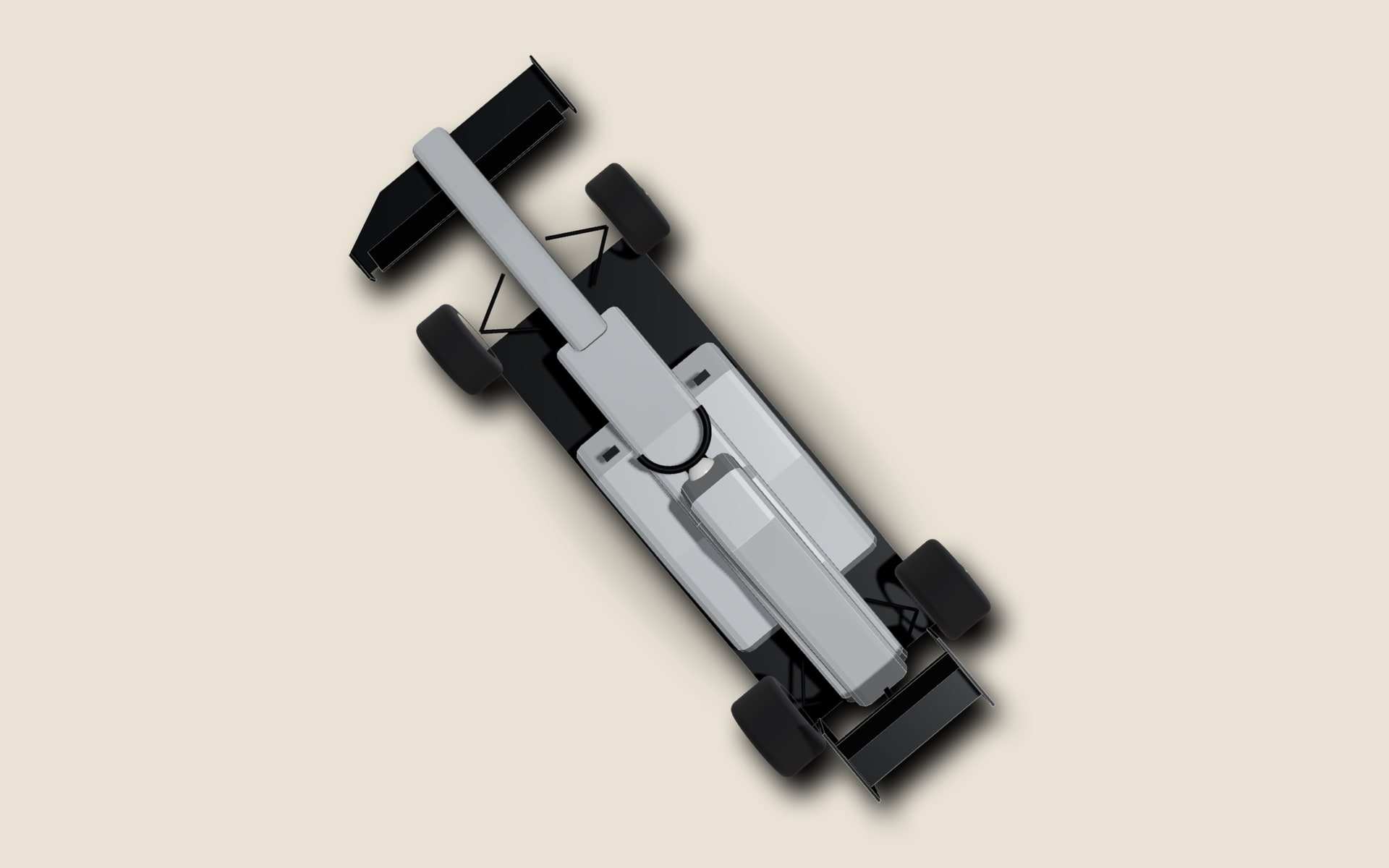
Mercedes W11, seen from above — our 3D model. Illustration by The Second Grid; simplified, not to scale.
Formula 1’s budget cap goes up from $135 million to $215 million for 2026. That $80 million step is the biggest change to the financial rules since the cap came in, but it doesn’t hand teams $80 million more to spend.
According to the FIA, the increase covers inflation, plus costs teams were already paying that sat outside the cap until now. The 2026 Financial Regulations set the figure at US$215 million for a season of up to 24 races, with a further US$1.8 million for each race beyond that.
Plenty of fans took the new number as the end of cost control, and some pundits called it a surrender to the big teams. Both views assume a higher cap means more spending. For the most part, that isn’t what has happened.
Why the cap exists
Before the cap, the top teams were spending “well in excess of $400 million” a year, ESPN reported. The teams at the back had a fraction of that, and some of them didn’t survive it.
F1 team cost cap by season
Source: Formula1.com — Explained: What is the F1 cost cap and why has it gone up?
Caterham went into administration on 24 October 2014, and Marussia followed within days. Its successor, Manor, entered administration in January 2017. They went under because they couldn’t match the spending of teams backed by car companies.
The cost cap arrived in 2021 as a hard limit on what a team could spend on the performance of its car. It was set at $145 million in 2021, $140 million in 2022 and $135 million in 2023, according to Formula 1 and F1technical. The idea was that teams would have to find lap time through engineering, and could no longer just outspend everyone else.
Inflation shrank the $135m cap
A cap fixed in dollars buys less every year that prices go up. Energy, freight, materials and engineering wages all rose after the cap was written, but the number stayed at $135 million. The calendar got longer at the same time.
Teams argued, with some justice, that they were taking a real-terms cut every season while being asked to do more. The FIA accepted that $135 million in 2021 money and $135 million in 2026 money are not the same amount, and the new figure starts from there.
Federico Lodi, the FIA’s Director of Financial Regulations, explained it to AutoHebdo:
“The $215 million cap set for teams from 2026 onwards is essentially the result of two factors. The starting level corresponds to the current cap, plus the effect of cumulative inflation and the effect of costs that are not currently included in our scope.”
Inflation is the first of those. The second is spending that used to sit outside the cap.
What the cap never covered
F1’s cost cap has never covered everything a team spends. It covers an agreed definition of car-performance spending, with a long list of exclusions.
Separate capital expenditure allowance, to 2025
$36m
Over a rolling 4-year period, outside the main cap. Scrapped for 2026; annual depreciation now counts against the main cap.
Source: Formula1.com — Explained: What is the F1 cost cap and why has it gone up?
Driver salaries are outside it. So are the salaries of the team’s 3 highest-paid staff, marketing, heritage-car programmes, travel to races, and legal, HR and finance costs, according to Formula 1’s explainer and Autosport. Health and safety costs were added to that list for 2026. It limits spending on the car, and driver pay was never part of it. It doesn’t reach the junior categories either, where drivers pay for their own seats.
Capital expenditure is the clearest example of what sat outside. Spending on infrastructure, such as wind tunnels, simulators and the machines that make the parts, had its own allowance of $36 million over a rolling 4-year period, separate from the main cap.
Teams argued about that number for years. Williams pushed for more room to modernise its Grove factory, and the FIA committed to CapEx reform in 2023.
For 2026 the separate allowance has gone, and annual depreciation now counts against the main cap. The buildings and tools haven’t changed. They’re just counted inside the headline figure now, where before they sat beside it.
So the total goes up because the definition is wider, and what a team can actually do with its money moves far less than the headline suggests. Formula 1’s own explainer calls the change “roughly neutral overall once changes are taken into account”.
2026: a full rules reset and a bigger engine cap
The new number comes with a new rulebook. 2026 brings new power units with a much bigger electrical share and no MGU-H, fully sustainable fuel, and a new chassis concept with active aerodynamics. Each one is a full engineering programme, and they all land in the same 12 months.
Power unit cost cap per year
Source: Formula1.com — Explained: What is the F1 cost cap and why has it gone up?
The engines have their own ceiling. The power unit cost cap, which runs alongside the team cap, was $95 million a year plus inflation for 2023, 2024 and 2025, and was due to rise to $130 million for 2026.
After talks with the manufacturers it went up to $190 million instead, Formula 1 reports. The FIA’s 2026 power unit financial regulations set it at US$190 million a year, adjusted for indexation. A team can stay comfortably under its own cap and still lose to a rival whose engine maker spent its money better.
That’s why the timing matters. Teams didn’t get an extra $80 million and then decide what to build with it. They got a recalculated cap in the same year as a full technical reset, and the bill went up as well.
What the cap cannot equalise
A cost cap doesn’t make teams equal. Everyone works to the same limit, but they start from very different places.
Red Bull’s 2021 cost cap breach
| Item | Figure |
|---|---|
| 2021 cost cap | £118,036,000 |
| Overspend | £1,864,000 (1.6%) |
| Minor-breach threshold | under 5% |
| Financial penalty | US$7,000,000 |
| Sporting penalty | 10% cut to wind tunnel and CFD limits for 12 months |
Source: FIA — Public summary of the Accepted Breach Agreement with Red Bull Racing
Much of what separates a championship team from a midfield one can’t be bought in a season. That means a wind tunnel built years ago, simulator correlation refined over a decade, staff whose salaries don’t count against the cap, and a factory that has been solving these problems for decades. The cap was never designed to take any of that away.
Then there’s enforcement. Red Bull’s 2021 spending went over the £118.036 million cap by £1.864 million, or 1.6%, according to the FIA’s summary of the Accepted Breach Agreement. That was inside the 5% the rules define as a minor overspend.
The team accepted a US$7 million fine and a 10% cut to its wind tunnel and CFD testing limits for 12 months. It was the first penalty to test whether the cap had any teeth.
The cap after 2026
The $215 million figure doesn’t mean F1 has given up on cost control. The FIA has reset a ceiling that inflation had eaten into, and brought spending that used to be exempt inside it. The cap still works, but it’s more complicated than the headline number.
That’s where the risk is. A rule with a long list of exclusions, a separate engine cap and a definition that keeps changing has to stay simple enough to police and strict enough to matter.
The cap was never meant to put Ferrari and the backmarkers on equal terms. It was brought in to stop F1 losing teams to a spending race again. Whether it still does that will depend on what gets counted inside it, and on what happens to the next team caught over the limit.
Key facts
| 2026 budget cap | $215m |
|---|---|
| Cap, 2023–2025 | $135m |
| The original glide path | $145m (2021), $140m (2022), $135m (2023) |
| Power unit cost cap | $95m a year plus inflation (2023–25); $190m from 2026 |
| Capital expenditure allowance | $36m over a rolling 4 years; scrapped for 2026 |
| Red Bull’s 2021 overspend | £1.864m over a £118.036m cap (1.6%) |
| Red Bull’s penalty | $7m fine + 10% aero testing cut for 12 months |
Video chapters
- 0:00The cap rises from $135m to $215m
- 0:50$80m: a recalculation, not new spending
- 1:30Why the cap began: Caterham, Marussia, Manor
- 3:05Inflation and the FIA’s Federico Lodi
- 4:49Exclusions and the $36m capex allowance
- 6:42The 2026 rules reset and the engine cap
- 8:07What the cap can’t equalise; Red Bull’s 2021 breach
Sources (13 · 3 primary, marked ●)
- ● 2026 F1 Regulations, Section D: Financial Regulations (F1 Teams), Issue 06 — FIA
- ● 2026 F1 Regulations, Section E: Financial Regulations (Power Unit Manufacturers), Issue 04 — FIA
- ● Public summary of the Accepted Breach Agreement with Red Bull Racing (26 October 2022) — FIA
- Explained: What is the F1 cost cap and why has it gone up? — Formula1.com
- Federico Lodi discusses the increase in the budget ceiling for 2026 — AutoHebdo
- FIA reveal concessions to F1 teams ahead of major cost cap change — RacingNews365
- F1 cost cap: all you need to know — Autosport
- The evolution of F1’s cost cap — F1technical
- F1’s budget cap controversy explained: What happens if a team did overspend in 2021? — ESPN
- Red Bull’s cost cap penalty: $7m fine and aero testing reduction — Motorsport.com
- FIA commits to F1 CapEx spending reform — Motorsport Week
- Inside story: Caterham F1’s collapse — PlanetF1
- F1 team Manor enters administration — Gulf News
Spotted an error? Email contact@thesecondgrid.com with your source. Confirmed fixes go on the corrections log.
Shorts on this story — open on YouTube
Read next
All articles
Rules & Tech
F1 wind tunnel testing restrictions: why the champion gets the least tunnel time
Formula 1’s champion gets 70% of the baseline wind tunnel allowance; the team that finishes last gets 115%. How the sliding scale works, and what happened when Red Bull’s allowance was cut even further.
5 min read · 8:47 video
Business
How much does it cost to reach F1? A ladder that bills you for winning
Winning Formula 3 pays €300,000. The Formula 2 season it has to be spent on costs €2–3 million, and the Super Licence points table means skipping that season is not an option.
6 min read · 18:16 video
Business
F1 logistics: how 1,200 tonnes of kit reaches the next race in 14 days
Up to 1,200 tonnes of equipment leaves every Formula 1 race weekend, and it has 14 days to be rebuilt on another continent. Most of the garage never makes that trip. It went by sea months earlier.
5 min read · 8:28 video