F1 wind tunnel testing restrictions: why the champion gets the least tunnel time
Formula 1’s champion gets 70% of the baseline wind tunnel allowance; the team that finishes last gets 115%. How the sliding scale works, and what happened when Red Bull’s allowance was cut even further.
By The Second GridChecked against 11 sources (3 primary)Updated
5 min read · 8:47 video
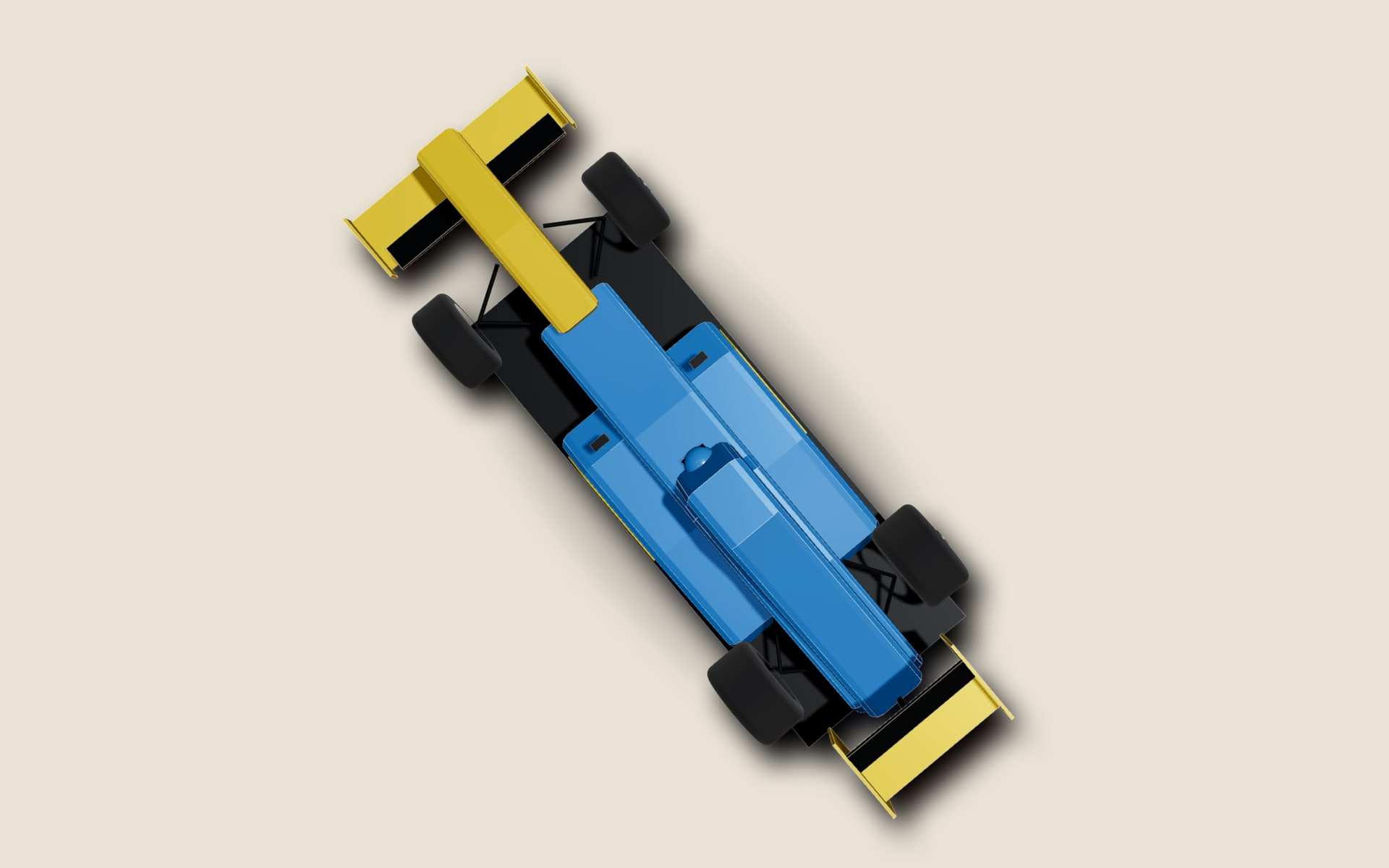
Renault R26, seen from above — our 3D model. Illustration by The Second Grid; simplified, not to scale.
The better an F1 team finishes the Constructors’ Championship, the less aerodynamic testing it is allowed. The champion runs its wind tunnel programme at 70% of the baseline allowance, and the team that finishes last runs at 115%. Every place in between moves the number by 5 percentage points (FIA, Section F).
The whole system is one table in F1’s operational regulations: a single row of 10 columns.
Why the money cap was not enough
F1 already had cost control. Team spending has been capped since 2021, at $145m to start with and $135m by 2023 (Motorsport.com).
F1 cost cap, 2023
$135m
Down from $145m in 2021. Driver salaries and each team’s 3 best-paid staff sit outside it.
Source: Motorsport.com — How will F1’s 2023 salary cap work?
The cap leaves out some of the biggest costs, though. Driver salaries sit outside it, and so do the 3 best-paid people at every team. Max Verstappen’s reported $55m salary for 2023 (RacingNews365) didn’t count towards Red Bull’s cap.
A money cap also can’t control what the money buys. Teams win by learning about airflow faster than their rivals, and the biggest budget doesn’t guarantee that. So F1 added a second limit, on aerodynamic testing itself. Its official name is the Aerodynamic Testing Restrictions.
How the allowance is counted
The rules count experiments. A wind tunnel run means mounting a scale model, bringing the tunnel up to speed and measuring the airflow over one configuration. The baseline allowance is 320 runs per testing period (Formula 1).
Aerodynamic testing allowance by constructors’ championship position
Source: FIA 2026 F1 Regulations, Section F: Operational (Issue 2)
CFD counts too. At baseline a team can test 2,000 new aerodynamic geometries per period in simulation, and each one has to be declared to the FIA.
Only the team in 7th gets exactly the baseline, because that’s where the scale crosses 100%. That means 320 runs. The champion, at 70%, gets 224. The last-placed team, at 115%, gets 368, roughly 3 runs for every 2 the champion is allowed.
A brand-new team also starts at 115%. On paper, then, the way to get the most testing is never to score a point.
Time is capped as well, so a team can’t get round the limit by making each run longer. At baseline it gets 80 hours of wind-on time per period, and 400 hours of tunnel occupancy in total.
Six testing periods and a mid-season re-rank
The year is split into 6 Aerodynamic Testing Periods. For the first 3, a team’s allowance is set by last season’s finishing order. At the end of the 3rd period (the end of June, in press shorthand) every team is re-ranked on the current championship (The Race).
Penalty for 5 runs over the limit
−50 runs
The regulations’ worked example: 325 runs against a limit of 320 cuts the next period’s limit to 270.
Source: FIA 2026 F1 Regulations, Section F: Operational (Issue 2)
So there are 2 rankings each year, and the June one is the one engineers watch. A team that slips from 2nd to 4th by June gets 10 more percentage points of testing for the rest of the year. A team that climbs the standings loses some.
The allowance doesn’t have to go on the current car. If a big rules change is coming, or the season is already lost, a team can spend all of it on next year’s car.
Going over the limit is expensive. The regulations give their own worked example: 325 tunnel runs against a limit of 320 cuts the next period’s limit to 270. That is a 50-run penalty for 5 extra runs.
Red Bull’s 2021 breach and the 10% cut
In 2022 the FIA reviewed 2021, the first season under the cost cap, and found that Red Bull had overspent.
Wind tunnel runs per testing period, 2023
Source: PlanetF1 — Red Bull’s wind tunnel reduction, compared with its rivals
It put the overspend at £1,864,000, or 1.6% of the £118m cap. The FIA’s own summary adds that had Red Bull applied a tax credit correctly, the overspend would have been £432,652, or 0.37% (FIA; RaceFans). By the FIA’s own numbers, then, the headline figure was more than 4 times what a correct tax filing would have shown.
Red Bull signed an Accepted Breach Agreement, which settled the case without an appeal (Sky Sports). The penalty had 2 parts. The first was a $7m fine, which RaceFans called the second-highest penalty in the sport’s history. The second was a 10% cut to its aerodynamic testing allowance for 12 months.
As champions, Red Bull were already on 70%, and the penalty took a tenth of that away. Through 2023 the team had 202 tunnel runs per period, against 240 for Ferrari and 256 for Mercedes (PlanetF1). Mercedes could do 54 more runs per period than Red Bull, about a quarter more.
Red Bull still won 21 of the 22 races in 2023, with the smallest wind tunnel allowance in the field.
Whether the handicap works is hard to prove
Nobody can say for sure. 2023 can’t be re-run with Red Bull on a full allowance, so “the handicap failed” is just as unprovable as “the handicap works”.
What the record does show is narrower. Since these rules arrived, the field has closed up to the point where RaceFans called it closer than ever before. But that happened alongside the cost cap and maturing technical regulations, and nobody has separated the effects.
The system was never sold as a guarantee anyway. The stated aim is modest: give the back of the grid more chances to learn than the front, and let the difference build over several seasons.
What F1 chose to handicap
Other sports handicap their winners too. In American football the worst team gets the first draft pick, and in horse racing the best horses carry extra weight. F1 leaves the car itself alone. It rations the experiments behind the car instead, period by period, by championship position.
That’s worth keeping in mind when following the development race. If a midfield team finds 0.4 seconds in August, some of the work behind it may have come from the extra allowance it got in June. If a champion’s upgrades slow down, its smaller allowance may be part of the reason.
The June re-rank also creates an awkward incentive, because a bad spring buys more testing for the autumn. There’s no evidence that any team has finished lower on purpose, but the table does reward it. It wouldn’t be the first F1 rule to reward the wrong thing: elimination qualifying in 2016 left nobody on track in the final minutes of Q3.
So when a team seems to find pace from nowhere, it’s worth remembering this table: 320 runs at baseline, scaled by championship position, capped by the hour and re-ranked every summer. Win the title, and the following year you get a smaller testing allowance than anyone else on the grid.
Key facts
| Champion’s allowance | 70% of baseline (224 wind tunnel runs per period) |
|---|---|
| Last place or new team | 115% of baseline (368 runs per period) |
| Baseline (7th place, 100%) | 320 tunnel runs and 2,000 CFD geometries per period |
| Wind-on time at baseline | 80 hours per period (400 hours of tunnel occupancy) |
| Testing periods per year | 6, re-ranked after the 3rd |
| Red Bull 2021 overspend | £1,864,000 (1.6% of the cap); £432,652 had a tax credit been applied correctly |
| Red Bull penalty | $7m fine plus a 10% aero testing cut for 12 months |
| 2023 runs per period | Red Bull 202, Ferrari 240, Mercedes 256 |
Sources (11 · 3 primary, marked ●)
- ● 2026 F1 Regulations, Section F: Operational (Issue 2) — FIA
- ● Public summary of the Accepted Breach Agreement between the FIA and Red Bull Racing (26 October 2022) — FIA
- ● 2023 race results — Formula1.com
- How F1’s new sliding scale aero testing rules work and what impact they will have — Formula 1
- The winners and losers of F1’s increased aero testing handicap — The Race
- Red Bull’s F1 budget cap penalty — RaceFans
- Red Bull handed $7m fine and wind tunnel penalty in FIA punishment for Formula 1 cost cap breach — Sky Sports
- Red Bull’s wind tunnel reduction, compared with its rivals — PlanetF1
- How will F1’s 2023 salary cap work? — Motorsport.com
- F1 driver salaries 2023 — RacingNews365
- The Formula 1 field is closer than ever before, but will that all change in 2026? — RaceFans
Spotted an error? Email contact@thesecondgrid.com with your source. Confirmed fixes go on the corrections log.
Shorts on this story — open on YouTube
Read next
All articles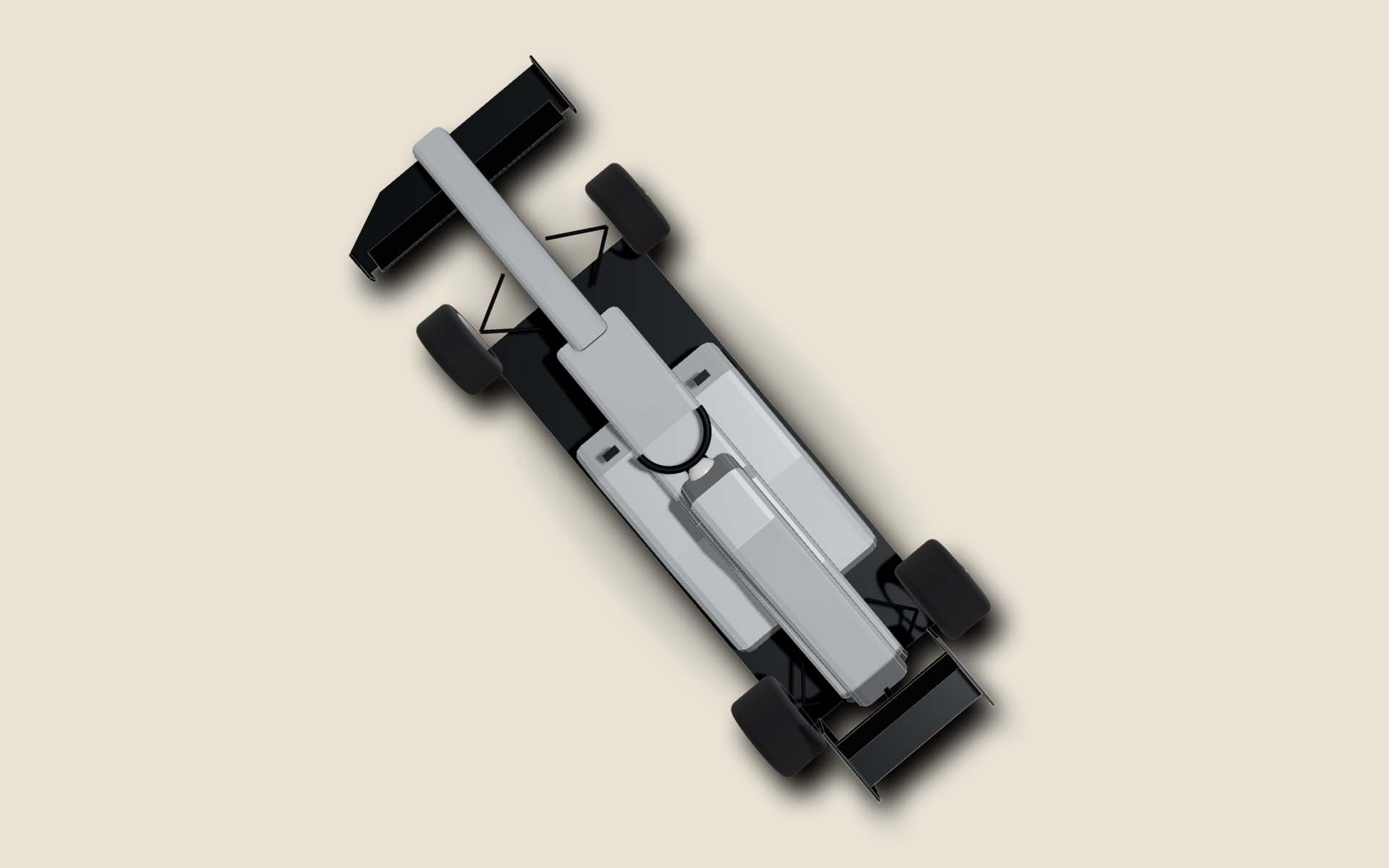
Business
The F1 budget cap is now $215m. Here’s why it isn’t a raise
Formula 1’s cost cap rises from $135m to $215m for 2026. By the FIA’s own account, the extra $80m covers inflation and costs that used to sit outside the cap. It isn’t new money to spend.
5 min read · 10:29 video

Rules & Tech
Why only 6 cars raced the 2005 US Grand Prix, and F1’s other worst rules
From Kyalami 1982 to Indianapolis 2005: 5 Formula 1 rule changes that backfired, ranked by what they cost before they were reversed. The worst kept F1 out of the United States for 4 years.
6 min read · 16:42 video
Strategy
F1 strategy mistakes: 4 pit-wall calls that cost 3 wins and a title
Monaco 2015, Silverstone 2022, Sochi 2021 and Abu Dhabi 2010: 4 pit-wall calls that cost 3 wins and a title. Only Monaco was a maths error.
7 min read · 10:12 video